SleepbyStephenKing

  • Subscribe to our RSS feed.
  • Twitter
  • StumbleUpon
  • Reddit
  • Facebook
  • Digg
Showing posts with label interview. Show all posts

Monday, 22 July 2013

Talking Vanishers or Dangerous Latitudes with James Ullrich (#interview)

Posted on 00:13 by Unknown
Good morning, all! Today we have the good fortune to welcome James Ullrich to the ruins, here to talk his work, his travels, and his writing.


Thanks for taking the time to stop by today, James. For those who haven't yet had a chance to give The Vanishers or Dangerous Latitudes a read, please tell us a little about yourself.


Hi Bob, thanks so much for having me. Happy to be here. I’m a freelance writer, editor and author. In terms of my travel writing, I specialize in European travel. My travel writing work has been commissioned and published in nationally distributed publications including The New York Examiner, World War II Magazine, Aviation History Magazine, Writers Weekly, Renaissance Magazine, Global Aviator Magazine, and Weider Publishing Group among others.  I’ve also written European-based travel guide material on popular websites/blogs including Travel Addict, Vagabondish, Backpacker, InTravel, Compass, and Writer Abroad. 


Earlier this year I published my first two novels, a dark suspense/thriller set in Prague called The Vanishers and an adventure about a travel writer on the hunt for a legendary lost city in the Amazon called Dangerous Latitudes.


I’ve also just finished my MA in clinical psychology with existential-phenomenological emphasis at Seattle University. 


Not a bad background from which to write! Whether you're talking journalism or narrative fiction, the journey from 'aspiring' to 'accomplished' can be a long one. When did you begin writing, and how did you feel when you first saw your work in print?


I’d always had a knack for writing; it’s what came the most naturally to me. I was always good at painting a picture with words and telling a story. When traveling I kept a journal (something I recommend to all writers and travelers). One thing that marked my travel experiences was a tendency to have encounters with interesting people, to find myself in strange or funny situations, and to observe a lot. So before I knew it I was writing down some of my stories for friends back home. They liked them and told me I should try to get published. I submitted some of my reports from various places, and to my surprise, they found interest. It was a pretty big thrill to see my name and my words on a printed, glossy page while standing in a large book store! I realized then I was in the extreme minority—a writer that actually got published and paid for it.


Not a bad way to get started, indeed! In terms of your novel writing, what comes easiest for you, and where do you struggle the most? Is it the title? The first paragraph? The last chapter? The cover blurb?


Mainly just making sure that the story works. The first paragraph has to really hook the reader and invite them in; and the last chapter is key too; it had to tie everything up and give the story and the characters the sort of closure they deserve. It has to be satisfying. So, that’s a struggle too. The blurb is a nightmare—trying to distill the essence of the story and the characters and why the book is good into a paragraph is really, really tough.


Sometimes, characters can take on a life of their own, pulling the story in directions you hadn't originally anticipated, especially when writing about time travel and magic. Have there been any twists or turns in your writing that surprised you, or really challenged your original plans?


Absolutely. Some writers, who are better with words than with life, have trouble creating textured characterizations; they have their characters act. But humans don’t act; they behave. They’re incredibly complex and often have conflicting motivations they’re not even consciously aware of. Their little tells—which are unique to every person—give them away. So I try to paint the picture using those little details to inform your understanding of them and where they’re coming from. I try to ply them with as many layers as I can, because people are multilayered. I also do it to increase the suspense—I want readers to keep guessing as to what the characters will ultimately do or feel. It’s not really hard to achieve that effect; we humans are subject to so many competing drives and desires and impulses, and that in itself creates lot of suspense, and I try to convey that while still keeping a tight, fun, suspenseful story going.


I like that line about behaving, as opposed to acting - great point. I suspect, given your background in travel, the answer is 'no' but do you have a soundtrack to your writing, a particular style of music or other background noise that keeps you in the mood?


I can write pretty much anywhere, having learned how to do it in noisy train stations and youth hostels on the road. That is a great skill to have, as solitude and quiet are not always available.


In terms of reader reactions, what is the strangest or most surprising reaction to your work that you've encountered to date?


People have responded incredibly well to the stories and the characters, so that is deeply satisfying. Also, people really dig the settings and atmospherics, which is really gratifying, since that element is so much a part of the experience of the books. 


For example, The Vanishers is a suspense/thriller/heist story with an international setting. The action spans from Rome to a Scottish castle to the French Alps to Prague. The title refers to the main characters, an elite heist team known as the Vanishers. They’re a team of four former Special Forces vets (and one female cat burglar) from around the world. They’re experts in espionage, disguise, and cutting-edge technology. No one knows who they are, what motivates them, or where they are headquartered. Finally Interpol assembles special team led by a legendary Inspector to track them down. The story begins in a museum in Rome, the scene of latest heist. It also happens to be the new Inspector’s very first day on the job. The chase moves through Europe as the story progresses. We move to a mist-shrouded castle in Scotland, then to the sunny, snowy, French Alps from a major action sequence and to introduce a key character. The final part takes place in Prague. 


For me and a lot of other travelers, Prague has always possessed a unique allure. The atmosphere is evokes a sense of mystery like few other places in the world, and that’s why it’s one of my favorite places to visit and write about. This also made it the natural choice for the final act of the story to play out; the cobbled alleyways, the vague feeling of danger you get when strolling in the narrow lanes under the church spires at night—especially if it’s a little rainy or misty—all epitomize that enchanting, Eastern Europe ambiance. I’ve tried to capture that atmosphere in The Vanishers.


With Dangerous Latitudes, the pattern is similar; we move from New York City to the dusty libraries of Europe in search of clues to a legendary Lost City in Amazon that was written about by the Conquistadors. Then the action moves to the jungles of South America. I wanted the reader to smell the old paper and dust of the European archives, and feel the heat and lurking danger of the jungle along with our hero, travel writer Matthew Hunt. From all the feedback I’ve received, it seems like I’ve succeed, which is incredibly gratifying.


To turn from pen to page for a moment, is there a particular author who has influenced or inspired your writing? Somebody who either made you want to write in the first place, or who just refreshes your literary batteries?


I really like writers like Ken Follett, who really knows how to craft a story in multiple genres and historical eras. They know their craft and understand that character and story are the fundamental drivers regardless of the time period the story takes place in or the subject of the narrative. I like the adventure/thriller writers like Robert Ludlum and John Le Carré too. Also, I love Clive Cussler, Steve Berry, Joanna Penn, and James Rollins, who often tie their suspenseful stories to a historical mystery of some kind. The non-fiction travel writing of Bill Bryson and the late Pete McCarthy really inspires me too; they’re funny and insightful and make me want to pack a bag, grab my old leather journal, and catch a plane somewhere.


Nice. It's been a while since I've read any Ludlum or Le Carré  but Cussler and Rollins are always on my TBR list. Before we let you go, what can we look forward to from you next? Is there a project on the horizon that you're really excited about?


I’m about to begin my next book, and am in the planning process. Since my stories involve lots of different locales and usually a historical mystery of some sort, there’s lots of research to be done! So that’s where I’m at right now. But it’ll be worth the wait. In the meantime, I write a weekly blog post for http://www.vagablogging.net/ and will be having travel articles published in Renaissance Magazine, Travel Post Monthly, and Writers Weekly in the next few months. 


A huge thanks to James for stopping by!


αωαωαωαωαωαωαω


The Vanishers

by James Ullrich


Priceless works of art are vanishing from Europe’s greatest museums, and the culprits are a shadowy team of experts in espionage and cutting-edge technology who can make anything vanish from anywhere—for a price. They are allied in an elite heist team known as the Vanishers, and their exploits have electrified the continent, giving them near-mythical status. They seem beyond capture.


Until now.


With an elite Interpol unit on their trail, the team considers quitting while they’re ahead—until a mysterious collector seeking a precious relic offers them the challenge of a lifetime. The Vanishers embark on a treasure hunt across Europe even as one member harbors an explosive secret that could doom them all.


An elaborate game of cat and mouse ensues as their nemesis, a determined Italian detective with a secret of his own, closes in. The detective soon finds his life threatened by an enemy operating deep within his own ranks, while the Vanishers realize their new assignment is more than they’d bargained for. After a stunning discovery and a tragic death, an alliance is forged between the adversaries to unmask the mysterious figure manipulating them all from the shadows.


Racing from the museums of Rome to the dark alleys of Prague, no one is quite who they seem to be as the Vanishers attempt pull off the heist of the century—and survive.


Dangerous Latitudes

by James Ullrich


Travel writer Matthew Hunt has covered stories, people, and dangerous destinations all over the planet. But nothing has prepared him for his latest assignment.


A call from a young woman with an incredible claim sets him on a once-in-a-lifetime quest for a fabled Lost City in the darkest reaches of the Amazon jungle.


The woman, a beautiful young historian named Elena, claims to have received a letter from her father, long thought to have perished while researching the fate of a sixteenth-century Conquistador. Held against his will deep in the jungle, he makes a desperate plea for help.


Armed with a cryptic warning and a set of clues, the worldly travel writer and the youthful historian begin a desperate quest to find the truth behind the man’s disappearance—and the mysterious object of his pursuit—before it’s too late. Their search for the truth will take them from the dusty archives of Spain to the furthest depths of the Amazon.


With each new revelation, another piece of the puzzle emerges, and other questions are raised. Along the way, the pair finds that some allies are not who they seem, and make a deadly enemy who intends to keep the spoils for his own.


All of Hunt’s resourcefulness and determination will be needed to stay alive and solve the mystery. What secret really lies in the heart of the rainforest? A glimmering Lost City, a Fountain of Life, or something more sinister than they can imagine?


αωαωαωαωαωαωαω


James Ullrich is a freelance travel writer, editor, and author. His work has been commissioned and published in nationally distributed publications including The New York Examiner, World War II, Aviation History, Renaissance, Global Aviator, Military, and Weider Publishing Group among others.


He’s also contributed European-based travel guide material on popular websites and blogs including Travel Addict, Vagabondish, Compass, Backpacker, InTravel, and Writer Abroad. He contributes a weekly blog post to Vagablogging ( www.vagablogging.net ).


In addition to writing, James has given talks on affordable independent travel to audiences interested in getting more out of their travel experiences for less cost.


Originally from Chicago, he’s previously worked as the Chief Managing Staff Writer for the Chicago Music Guide and served graduate internships in the Political Affairs Office of the US Embassy in London and the White House Office of Presidential Correspondence.


In his free time he enjoys wandering through Europe with a backpack and a journal. He hangs his rucksack in Seattle.
Read More
Posted in adventure, archaeology, interview | No comments

Thursday, 18 July 2013

Talking Time Travel & Magic with Scott Spotson (#interview)

Posted on 01:45 by Unknown
We have the good fortune today to welcome Scott Spotson to the ruins. An author, artist, and fellow Canuck, Scott currently has three titles in print, with a fourth - the creepy and unsettling thriller, Delusional - soon to come.


Thanks for taking the time to stop by today, Scott. For those who haven't yet had a chance to give Seeking Dr. Magic or Life II a read, please tell us a little about yourself.


Hi, thank you as well for having me here! I’ll start off by saying I’m glad we’re both Canadian, as we do need a Canadian voice in this world of indie writers!  My book, “Life II,” is wholly set in Canada, except for side trips to Greece.  I work in tax, which many people would find to be a field which is a polar opposite to creative writing! Not to worry, there’s absolutely no discourse on taxes in any of my books!


Well, Stieg Larsson gave it a shot, but he abandoned the tax discourse after about 100 pages to write a murder mystery instead. I'd say the opportunity is still there!


Getting back to you for a moment, the journey from 'aspiring' to 'accomplished' can be a long one, even in this era of small presses and digital publishing. When did you begin writing, and how did you feel when you first saw your work in print?


I started writing as a young kid; these were all short stories of vivid imagination. For example, I once wrote about finding myself in a dream and seeing eyes at the back of my mother’s head (now I know how she was able to find out everything I did wrong!) and having to eat myself out of a mountain of ice cream when trapped in there.  I wrote a book in my early 20’s, a novel that is nowadays considered “new adult,” but had to shelve it as there was no electronic publishing back then. I started again in the summer of 2012 when I had too many stories in my head, and couldn’t resist trying again. This time, I pleasantly found out about the new digital publishing era.


Digital publishing has certainly opened doors, but it's only half the equation. Given that it must sometimes seem like a second job all on its own, how do you keep yourself excited about those self-promotion opportunities?


You’re right, in self-publishing on a digital platform, there’s no publisher, and there’s zillions of books out there, so you do have to promote yourself, or you’ll never be noticed. I resolved to myself at the beginning, to truly test my writing, not to involve my family or friends in reviewing my books. I’m glad I did it that way.  In fact, I’ve made many new friends, even if only on-line, among beginning authors.  I keep myself motivated through reviews that show how much people liked my books, and especially those that said the books made them think about what they’re doing.  


That's a fair approach. In terms of the writing itself, what comes easiest for you, and where do you struggle the most? Is it the title? The first paragraph? The last chapter? The cover blurb?


The creation of ideas if the easy part. I guess the hardest part is making the story stick together, although I pretty much know the story from beginning to end. It’s those gaps that can kill your story. For example, it’s easy to imagine a wizard fighting a monster. But what you need to set up are the background and the characters: where did the wizard come from? Why does he (or she) want to fight, what is he defending or asserting? Where does the monster come from, and how do they meet? These are very important details, and if you flesh them out, you’re beginning a solid book. So, to answer your question, it’s not really the first chapter or last chapter, it’s making the story consistent and compelling.  


Good point - those details make the difference between disposable and memorable. Sometimes, characters can take on a life of their own, pulling the story in directions you hadn't originally anticipated, especially when writing about time travel and magic. Have there been any twists or turns in your writing that surprised you, or really challenged your original plans?


Yes, that happens many times, and I like it.  It makes your book more fresh.  For example, in Life II, I introduced a surprise fellow time traveler named Lucinda, who was absolutely nowhere in my initial concepts of the story. That choice was controversial, as some readers felt she threw off the balance of the story and didn’t belong there. But I felt she was essential to shake up the story, as Max (the main character) seemed to be coasting along too easily to the conclusion of the book at that point. And I felt it was important to return to the origins of Dr. Time, to wrap up the vital role she had at the beginning of the book.  


And in Seeking Dr. Magic, I originally planned to have Dr. Magic killed by the authorities, and to have the main character, a detective, grieve over what would have been a waste of extraordinary magic.  However, I kept Dr. Magic alive, and the ending of the book showcases their close relationship. 


And that, right there, is magic. 


Do you have a soundtrack to your writing, a particular style of music or other background noise that keeps you in the mood, or do you require quiet solitude?


Interesting question. Is this common among writers?  I never thought of it, so I guess I’ll have to answer that I write in solitude.


In terms of reader reactions, what is the strangest or most surprising reaction to your work that you've encountered to -date?


Yes, I was very surprised how readers loved my stories, but could not relate to the main characters (many could, but also many couldn’t).  For Life II, the readers felt the main character was very self-centered, and I didn’t intend him that way.  Maybe wanting to change your life a second time around requires a self-centered person, so maybe I can’t get around that, but I certainly can look at softening the edges of the choices he makes without losing the thrust of the story.  For Seeking Dr. Magic, the reader felt that the main character, a detective, was celebrity hungry and arrogant.  Naturally!  I did that on purpose, to set him up for belittling by an even more arrogant Dr. Magic. I thought it would be fun to have a battle of the super-egos.  Now I understand that even with that premise, arrogant characters are hard to like in a main role, so I’ll see about softening these edges as well.


Actually, I like the idea. To turn from pen to page for a moment, is there a particular author who has influenced or inspired your writing? Somebody who either made you want to write in the first place, or who just refreshes your literary batteries?


Well, it’s very hard to say, because I read like osmosis, without seeking out certain authors.  My parents had their house very well-stocked with books, mainly adult books, so I would read a bit of this and that, without really reading the whole book through, as I was still young and didn’t think of myself as a student of reading, just grabbing what I thought interesting.  As a kid, I would sometimes read four children’s or geared-to-young-adult books in one day (back then, books weren’t so characterized as “young adult”). There’s been years where I hardly read any books, being so busy with college or raising kids. So you could say I’m eclectic in my tastes.  However, I love science fiction, some fantasy, and speculative fiction.  


Before we let you go, what can we look forward to from you next? Is there a project on the horizon that you're really excited about?


Yes! I have two books in the works, first coming up (September) is “Delusional” where a young woman in the center of a love triangle is experiencing delusions, but later one we find out that someone with paranormal abilities is causing these hallucinations to drive that woman away.  It’s bizarre as the main character isn’t sure what is real and what isn’t real.  Then she investigates these strange happenings and gets further caught up in the chaos.


The second book (hopefully scheduled for December) is “The Four Kings” whereby four well-meaning but arrogant wizards (all young adults) take over governing the world, introducing what they see are economic and political reforms to “kickstart” human civilization “by a hundred years.”  Thus, the book sets up a cultural clash between the wizards and the humans, as the wizards use the concept of “bread and circuses” to keep their subjects entertained through amazing games of challenge and skill that they put on. We see the story through the eyes of Amanda, who’s human and has been appointed by the wizards as “Supreme Liaison” to act as go-between the humans and the wizards. It should be a fun read! 


They sound like interesting stories - best of luck with them, and thanks for stopping by!


αωαωαωαωαωαωαω


Seeking Dr. Magic

by Scott Spotson


Chaos reigns around the world. Strange creatures, accorded the title "Phantom Ninjas" by the media, are leaping off tall buildings and somersaulting back up without any scratch - and then disappear. There follows more spontaneous acts of magic, confounding the world. Who - or what - is responsible? In the middle of the mystery arrives Detective Hetfield, a private investigator just recently retired from the FBI, who is accustomed to fame as a star witness in the murder trial of a beloved actress. Hetfield, seeking ever more celebrity to boost his profile, uses the media to put forward the theory that a person of extraordinary magical powers is behind all the incidents, and labels him Dr. Magic. Hetfield gets much more than what he bargained for when that powerful being does exist - in the form of a young man long disillusioned with his past - and cruelly takes him up on his offer.


Life II

by Scott Spotson


Upon discovering a 1958 book titled "Account of Time Travel on Earth Using Wave Theory," 42-year-old Max Thorning's life is thrown into chaos. Seeking answers to the book's cryptic clues, he discovers Dr. Time, a seemingly benign alien who has control of the Time Weaver, a remarkable device that can command any scene from the Earth's past. Dr. Time offers him a choice to go back into Time, to any point in his lifespan that he can vividly recall. The catch: he can only bring his memories, and can only live the future one day at a time. Follow Max's dilemma as he goes back to his 16-year-old self and tries to forge his destiny into a new one called Life II.


αωαωαωαωαωαωαω


Scott Spotson is a Canadian novelist who excels in imagining scenes of intrigue and adventure within ordinary lives while daydreaming, then pulls together various plots to create a compelling story.


Scott has written three books: Life II, a time travel novel; Seeking Dr. Magic, a novel that imagines what happens when a powerful wizard comes of age as a young man, and wreaks his havoc on the world, which is yet unaware of his existence; and You Know You're Thin When..., a humor book using large single panel cartoons.


A fourth book, Delusional, will be published tentatively by July 2013.


Facebook

Goodreads

Twitter

Website


αωαωαωαωαωαωαω


disclosure goes here (if necessary)

Read More
Posted in interview, sci-fi, urban fantasy | No comments

Thursday, 27 June 2013

Through A Hole In The Universe with Catfish McDaris (INTERVIEW)

Posted on 00:17 by Unknown


Catfish McDaris is an American poet and author, born in Albuquerque, New Mexico, who has written poetry and prose for the past 20 years. An ex-G.I. Joe who hopped freights and hitchhiked across the country, he's built adobe houses, tamed wild horses, made cattle troughs, worked in a zinc smelter, and even painted flag poles.


Our very own Donald Armfield sat down for a chat with Catfish, to talk about his writing and his career, drawing an exclusive piece from him in the process!


What was it like working at the Post Office, during the Anthrax scare?


While working on the letter sorting machines at the main post office in Milwaukee we would get all kinds of threats. Anthrax and Ricin were supposedly sent to Washington D.C. or other politicians often. The letters would go through the bar coder and sorter and they would explode in white powder, 99% of the time it was baby powder, rice, or oatmeal. We'd sometimes get covered in a huge cloud and Haz-mat teams were called and sometimes dogs for bombs. We'd be quarantined and checked for poisoning and sent for showers. When Jeffrey Dahmer was captured we got bombs on the way to prison to blow him up. We evacuated quite often. There were several shoot outs inside the building in my 30 year career and one guy went and committed a murder while on the clock and I watched the FBI drag him off in handcuffs


What sets the mood for you, to sit down and write?


Since I'm an alcoholic and addict that has been clean for 9 years, I drink coffee. I have a wife of 30 years and a daughter of 25 they give me a reason to stay sane. I garden, shoot pool, stay away from all my old bad influences. I haven't worn a watch in 3 years. I no longer care what I own or owe, when you get to that point you're almost invincible. I do have a little snack of pills from Dr.Feelgood.


Some publishers would definitely publish your work, why did you decide to go the Chapbook route?


I wrote a novel and it bounced around NYC, with agents and never saw daylight. I discovered Bukowski, another postal worker like myself. I started writing stories and the small press world liked them. I started writing poems and reading them in public. There was a great scene in Milwaukee and if you hold your own on stage here, you could do it anywhere. I met some famous folks along the way and read at some great venues. I invented Wordstock in 94 and a series of poetry and music events and gave all the proceeds to Hope House, a charity for homeless women with children. Editors from the small press invited me to do chapbooks with them and I later discovered no one buys poetry. You need academic credits to get the big publishers to take notice.


What's in the future for Catfish McDaris?


Future writing projects are a long piece about going into the Veterans Hospital for a 6 month boot camp rehabilitation to get clean called: Lipstick On A Pig. I'll have a new book from Kolkata, India in Bengali by year’s end. An old interview I did that was translated into Esperanto should see daylight again. I was just in The Lowdown an anthology dedicated and with Lawrence Ferlinghetti. I received Big Pulp today which contained my imaginary trip to visit Ginsberg and Burroughs. I have lots of other tricks up my sleeve. With the Web instead of snail mail and SASE's for submissions it's insanely easy to be a writer. Beware of face book.


αωαωαωαωαωαωαω


Through A Hole In The Universe


(exclusively for beauty-in-ruins)


I’ll be the exterminator in a flea circus


play trombone in a bedbug parade


the worm swimming in a sun yellow


bottle being shared by alley skunk skanks


until their eyes fill with death tears forever


Kahil Gabran saying: it’s all love baby doll


or David Lerner: people hear my poetry and


weep, scream, disappear, start bleeding, eat


their television sets, beat each other to death


Change my name to December Q. January and


swim in the Sea of Tranquility and to the bottom


of the Mariana Trench and find a mermaid harem


and send up poems in bottles and never come back.


αωαωαωαωαωαωαω


A huge thanks to Catfish for stopping by!

Read More
Posted in book review-DA, interview, poetry | No comments

Tuesday, 4 June 2013

Q&A with Jason Matthews (author of Red Sparrow)

Posted on 02:36 by Unknown
Good morning, all!


Joining us today for a brief Q&A is Jason Matthews, author of the espionage thriller Red Sparrow. If you missed my review last week, then take a moment to check it out after the Q&A (you'll find a link below).


Q. Good morning, Jason, and thanks for stopping by. I know one of the first things that struck me about Red Sparrow was the inclusion of food. Unless it's a scene where a dinner party is about to be ambushed, or where a character is about to be poisoned, you rarely see heroes stop to eat in most thrillers. Where did you come up with the inspiration to so thoroughly incorporate food into the story?


The three S’s:  Spying; Sex; and Sauces.  I just thought inserting food would be a distinctive and fun addition in a serious spy story.  I’ve also read and admired novels in which meals and food are minutely described.  I purposely made the recipes elliptical, more like clues than detailed instructions.


Q. How did you come to choose the recipes for each chapter? Did you seek out recipes to match the story, or did you already have the dishes in mind while writing each chapter?


The choice of recipes is pretty much random, in some cases they might match the story line (beet soup in Moscow, Greek food in Athens) but mostly I slipped in food when I thought it would be interesting (Gable eating and talking at the same time.)


Q. Through your career experience in the CIA, you must be quite an expert in quickly assessing the people you observe. Do you think what people choose to eat says a lot about their character? Is it really true, that “you are what you eat?"


Definitely agree.  What people eat, how they eat, how they use their knife and fork, how they hold their liquor, all can be indicators of character, motivations, or vulnerabilities.  Intelligence officers do a lot of their work--spotting, assessing, recruiting--over lunch or dinner.


Q. If we can talk quickly about something (or, rather, someone) else who struck me as a reader, let's talk Dominika for a moment. As a male author, did you find it difficult to write Dominika? How did you ensure that she was as true-to-life as possible?


Other authors have mentioned that some characters in their books actually grow and evolve as they write through to the end.  That’s what happened to me and Dominika.  As she grew and became more complex, I saw that she was a compelling personality and had to become the principal character.  She is Russian, she’s a spy:  I could write about that.  I tried to make her a true-to-life female character.


Q. No spoilers, but I do have to ask - is the story of Nate and Dominika over? Will we get to learn what happens to them in the future?


I always intended to continue the story (I hope the ending of Red Sparrow screams sequel!) I’m now working on a second book:  more moles, more operations, more surveillance.  They all face a lot of challenges.


That is does! Thanks for joining us today, Jason.


αωαωαωαωαωαωαω


For those of you who missed it, you can check out my review HERE.


αωαωαωαωαωαωαω


Red Sparrow by Jason Matthews  

Pub. Date: June 4, 2013


IN THE GRAND SPY-TALE TRADITION OF JOHN LE CARRÉ…comes this shocking debut thriller written with insider detail known only to a veteran CIA officer.


In present-day Russia, ruled by blue-eyed, unblinking President Vladimir Putin, Russian intelligence officer Dominika Egorova struggles to survive in the post-Soviet intelligence jungle. Ordered against her will to become a “Sparrow,” a trained seductress, Dominika is assigned to operate against Nathaniel Nash, a young CIA officer who handles the Agency’s most important Russian mole.


Spies have long relied on the “honey trap,” whereby vulnerable men and women are intimately compromised. Dominika learns these techniques of “sexpionage” in Russia’s secret “Sparrow School,” hidden outside of Moscow. As the action careens between Russia, Finland, Greece, Italy, and the United States, Dominika and Nate soon collide in a duel of wills, tradecraft, and—inevitably—forbidden passion that threatens not just their lives but those of others as well. As secret allegiances are made and broken, Dominika and Nate’s game reaches a deadly crossroads. Soon one of them begins a dangerous double existence in a life-and-death operation that consumes intelligence agencies from Moscow to Washington, DC.


Page by page, veteran CIA officer Jason Matthews’s Red Sparrow delights and terrifies and fascinates, all while delivering an unforgettable cast, from a sadistic Spetsnaz “mechanic” who carries out Putin’s murderous schemes to the weary CIA Station Chief who resists Washington “cake-eaters” to MARBLE, the priceless Russian mole. Packed with insider detail and written with brio, this tour-de-force novel brims with Matthews’s life experience, including his knowledge of espionage, counterintelligence, surveillance tradecraft, spy recruitment, cyber-warfare, the Russian use of “spy dust,” and covert communications. Brilliantly composed and elegantly constructed, Red Sparrow is a masterful spy tale lifted from the dossiers of intelligence agencies on both sides of the Atlantic. Authentic, tense, and entertaining, this novel introduces Jason Matthews as a major new American talent.


Website: RedSparrowBook.com


αωαωαωαωαωαωαω


Read More
Posted in interview, thriller | No comments

Friday, 31 May 2013

Interview with Tamara Romero (Bizarro author of Her Fingers)

Posted on 02:07 by Unknown
Tamara Romero comes to the New Bizarro Author Series (NBAS) hosted by Eraserhead Press of weird fiction. It showcases strange fiction by unknown authors who may not get a chance with other publishing companies.


About the Book:

A red-haired witch with steel fingers, dragged unconscious from the currents of the Adrenaline River. An isolated researcher suffering from a disease called, the Gag. Covens of stoned witches dancing to techno in the forest. A punk whose specialty is replacing body parts with metal replicas. Sleepwalkers who don't want to wake. Trees hiding a filthy secret--the result of a perverse dictator's mind. A pink spy-swan, monitoring every move. A lyrical, dark and charming bizarro story of intrigue and discovery from a dimension just beyond ours


About Author:

Tamara Romero was born in Barcelona. She has worked as a TV producer, a bartender in a metal bar, a press manger for comics publishing house, and a writer and freelance editor at an erotic film company. Now she writes weird fiction and goes to the movies. This is her first book. Her book also has a discussion going on now at ireadoddbook.com.


Our very own Donald Armfield sat down for a chat with Tamara, to talk about Her Fingers, her writing, and more . . .


Q. This didn't seam like the typical bizzaro read, was this story originally a fantasy?


If something can be called a typical anything, then it’s not very exciting. The point is to surprise and confound. I wrote this four years before I even learned about bizarro. When I was told it qualified, I was more than happy to agree.


Q. How did you find you way to the strange grounds of Bizarro Fiction?


First: Goodreads. That site is fantastic to find out about new books. And then I went and met these people in Portland, Oregon, in the strange netherworld of inventive invective and crazy coffin vision and felt right at home.


Q. Do you kinda have an infatuation with witches, or just decided to write about one?


For legal reasons, I cannot answer this question. BUT! when I wrote Her Fingers I had just ended reading The Mists of Avalon by Marion Zimmer Bradley and I loved the character of Morgana Le Fey. She was a big influence for my witch, Misadora. Now I have my own coven.


Q. What's is a couple of the strangest things you have ever read?


The weirdest fiction you’ll ever read is usually found in government forms and applications. And terms and conditions on the back of metro tickets give me the giggles. Completely useless for publication, but whaddareyougonnado. As for novels, one of the strangest texts I’ve read is Veniss Underground by Jeff Vandermeer. I loved that novel!


Q. An erotic film company, I love erotica reads lately did you enjoy that job?


I did, actually! My job was mostly related to erotic books (not movies): writing, editing… I don’t read erotica at all anymore, but one of my favorite novels happens to be Story of O.


Q. How about something funny, straight out bizarre off the top of your head?


I ain’t no right wing or left wing or in the middle I am a real fed up American and call it as I see it.


Q. What helps you get in the mood for writing?


A bottle of gin for breakfast.


Q. Whats next for Tamara Romero?


A bottle of gin. And also supporting Her Fingers out there and writing some new short fiction. I’m also working on a detectives novel. Awkward detectives.


A huge thanks to Tamara for stopping by!

Read More
Posted in bizarro, interview | No comments

Thursday, 30 May 2013

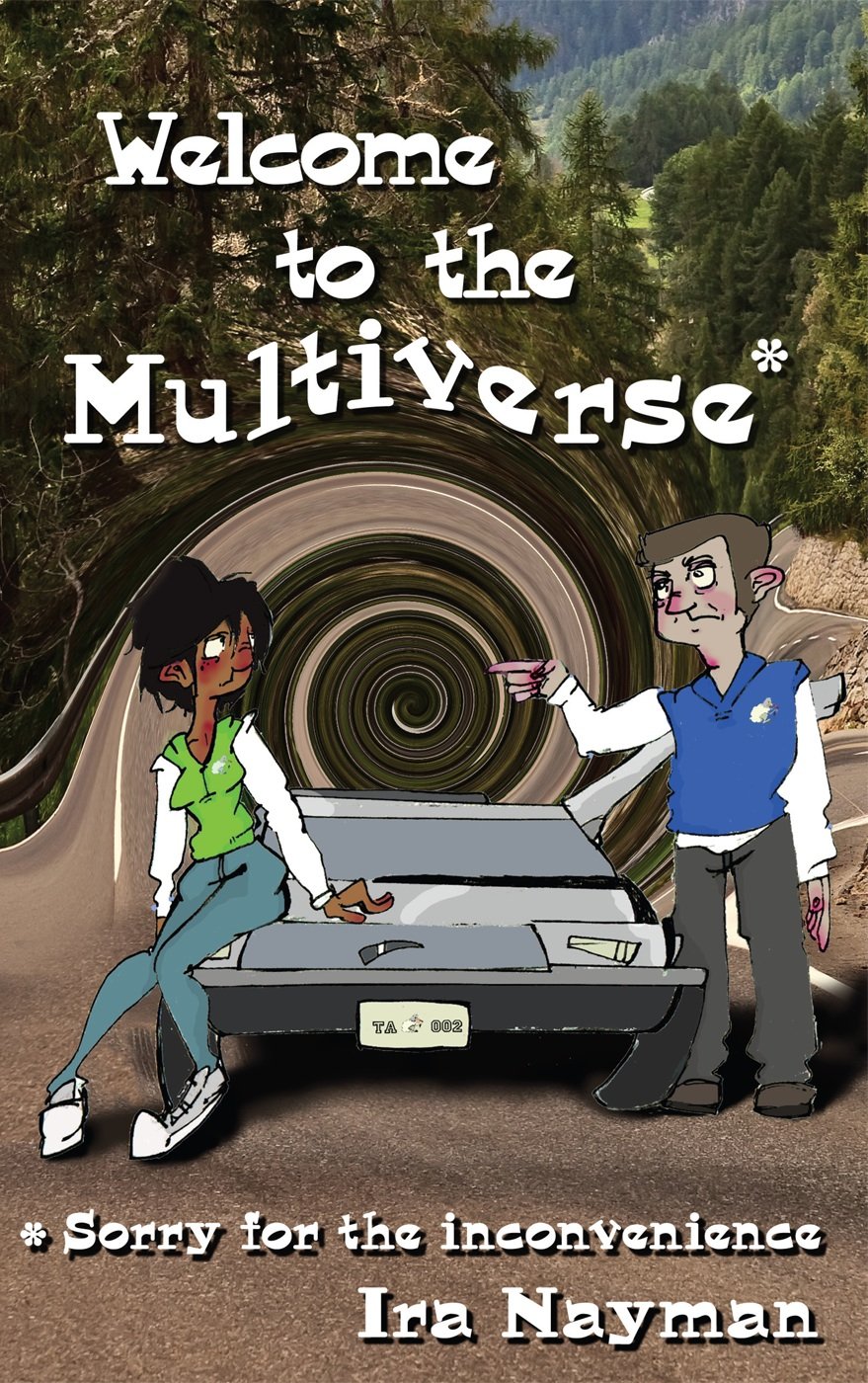
Interview with Ira Nayman, author of the sci-fi comedy Welcome to the Multiverse

Posted on 02:22 by Unknown


Good morning, all! Please join me in extending a warm welcome to Ira Nayman, author of the science fiction comedy, Welcome to the Multiverse*. Ira and I were first introduced way back in December, and were schedule to meet up for a chat at the Ad Astra convention back in April, but circumstances - mostly car trouble - waylaid those plans. Fortunately, I was able to catch him between projects, and he was able to share a bit of his wit, wisdom, and words of wonder . . .


Q: Thanks for taking the time to stop by, Ira. For those who may be new to your writing, and who haven't yet had a chance to give Welcome to the Multiverse* a read, please tell us a little about yourself.


I’m just this ordinary guy who leads a very dull, very unexciting life – seriously, if you saw me on the subway, you wouldn’t give me a second glance! – who just happens to have a rich and bizarre inner life which I share through my writing.


Q: The journey from 'aspiring' to 'accomplished' can be a long one, even in the era of small presses and digital publishing. When did you begin writing, and how did you feel when you first saw your work in print?


I decided to devote my life to writing humour when I was eight years old. I started right away by writing parodies of the Sherlock Holmes stories I was then reading. Throughout my youth, I did what I could when I had the time (I remember doing a series of cartoons by cutting and pasting images from newspapers and magazines and adding a punchline to the bottom – I sure could have used a graphics programme back then! I did a second series of cartoons drawing the images with a Spirograph – remember Spirographs? anybody? ANYBODY? – and adding punchlines.) When I was 14, a friend and I wrote The Tragedy of Richard Nixon, a parody of Shakespeare’s The Tragedy of Julius Caesar  which replaced his characters with characters from the Watergate scandal. I’ve been writing prose and scripts steadily since 1984.


I always get a thrill the first time I hold a published work in my hand. The ebook version of Welcome to the Multiverse* was published three months before the print version, but it didn’t seem real to me – I mean, really real – until I received my first print copy.


Q: For what it's worth, I remember Spirographs . . . somebody introduced me to the mathematical basis a while back, and I lost all interest.


While genre fiction and humour so often seem to go together, writing a genre novel that’s centered around humour is often a daunting task. What made you decide that’s the kind of stories you want to tell, and have you ever found it tough to balance the humour and the story?


As I mentioned, my life’s ambition has always been to write funny things. I have done my best to explore the widest range of media (everything from film and radio to fake news and Web comics), and varieties of humour (from romantic comedies and sitcoms to surrealism and political and social satire). I find that humour is a meta-genre that blends well with a variety of other genres.  I have written a lot of humourous speculative fiction in the past decade because I find that SF gives me a lot of room in which to play with funny ideas. If I find that I have exhausted the possibilities, I will likely move on to another genre, but I don’t see that happening any time soon. :-)


Despite being a digressive sort, I don’t think I have a problem balancing humour and story, but I do occasionally get the criticism that my humour sometimes gets in the way of the plot. The assumption, I believe, is that story and character are what people read narratives for, and, therefore, should be more important than any other aspect of a piece of writing. (In fact, comic characters are usually more fixated on one thing than dramatic characters – because fixation is funny, especially when thwarted – and varying degrees of ratio of plot to humour – from thin to ornate – have led to successful works.)


I have a different approach. I believe that once a writer has established that his work is supposed to be funny, the reader will expect it to be consistently funny throughout. The writer might be able to get away with a paragraph or two of exposition (although I have “exposition = death” tattooed behind my eyelids, and always try to present necessary exposition in a humourous way), but if the reader is left not laughing for too long, s/he may come to the conclusion that the writer is not very good. As long as my readers are laughing all the way through my books, I feel like I have done my job.


Q: In terms of writing, what comes easiest for you, and where do you struggle the most? Is it the title? The first paragraph? The last chapter? The cover blurb?


The easiest thing for me is developing ideas – I already have more than I could possibly write in this lifetime, and I get more every day! I was very conscious of this while writing the follow-up to Welcome to the Multiverse*; I would go to sleep at night thinking about the scene I would like to write the next day, and, most often, it was there for me when I woke up! (This is not a matter of luck, by the way: over the years, I have trained myself to see the world as brimming with comic potential.  Add to this all of the reading I do, and my subconscious is primed for creativity.) Because of this, I usually have the title and most of the major plot points, from beginning to end, before I actually sit down to write a story. As you can imagine, this gives me the confidence to do it.


If one aspect of writing comes less easily to me, I would say that it has been professional promotional writing: cover blurbs, press releases, bios, etc. I realized a few years ago, though, that if you approach these things the same way you approach your fiction writing (in my case, by applying humour), they are not only much more fun (and, thereby, easier) to do, but the results are much, much better.


I should also say that, although not really encompassed by your question, the hardest thing for me as a professional has been self-promotion. I go to a lot of science fiction conventions, for instance, to sell my books; as a recovering shy person, they were, at first, very difficult for me. Even now, with some experience, I don’t always have the energy for that kind of direct salesmanship. I am also on social media (I have a Twitter account as well as a personal and a fan/author/whatever page on Facebook), but I have no idea if what I am doing there is helping me. This is my main frustration as a write: I know that a lot of people would really enjoy my writing, but I don’t know how to make them aware that it’s there for them.


Q: Definitely a challenge, getting your name and work out there in front of people, but hopefully a few wandering souls will stumble by and decide to pick up a copy today. 


*hint, hint* that goes for all you readers! :)


Sometimes, characters can take on a life of their own, pulling the story in directions you hadn't originally anticipated. Were there any twists or turns in Welcome to the Multiverse* that surprised you, or really challenged your original plans?


As I previously mentioned, I plan in a lot of detail before I start writing (I had over 10 pages of single spaced notes before I typed word one of the novel), so I am rarely surprised by the direction a story goes in. Because I like to keep my writing plum full to burstin’ with comic invention, though, I am always open to incorporating ideas right up to the point I finish a manuscript, and once in a while I will come up with an idea that gives unexpected (to me) depth to what I am writing. An example of that actually happened with Welcome to the Multiverse*.


The main character in the novel is a new recruit to the Transdimensional Authority (the organization that monitors and polices traffic between dimensions) named Noomi Rapier. I knew I wanted to have her meet four different versions of herself in different realities over the course of the novel, and had planned their similarities and differences in some detail. However, it wasn’t until I sat down to write the chapter where she encounters the first alternate version of herself that I decided to write it from the point of view of the other version of Noomi. So, we see the alternate Noomis living their lives before the main Noomi shows up, we see their reactions to her after she leaves and we see the interactions between the characters from their point of view. Although I didn’t realize it at the time, I have come to believe that this gives those characters a reality that they wouldn’t have had if we saw them through the main Noomi’s eyes, and this in turn strengthens the main theme of the novel (that choice and chance determine who we become at any moment in our lives).


Q:  Do you have a soundtrack to your writing, a particular style of music or other background noise that keeps you in the mood, or do you require quiet solitude?


I usually have music going on in the background while I’m doing just about anything. When I listen to the radio, I divide my time between oldies and new rock stations. When I listen to music on CDs or the Internet, it runs the gamut – I like just about everything except country and gangster rap (political rap, on the other hand, is awesome). Sometimes, I will stop what I am doing and listen to a favourite song. Most often, though, it helps me concentrate on what I want to say, and, when the words are not coming, gives my conscious mind something to process while my unconscious mind works on the creative problem at hand.


Q: In terms of reader reactions, what is the strangest or most surprising reaction to your work that you've encountered to date?


Being, as I am, a recovering shy person, I am not effusively humorous in public, and, when I do make jokes, they are often so dry that people cannot tell if they are meant to be funny or not. When I first started distributing my writing among my friends, a common reaction was, “Wow, this was a lot funnier than I was expecting it to be!”


Gee, thanks.


I don’t get that reaction any more. Much.


I haven’t had that many reactions to the novel, to be honest with you. Reviews of my books have been almost uniformly positive. I’ve been at enough cons that people who have bought previous books and enjoyed them seek me out to buy my latest books. At the latest Ad Astra con, where I launched the print version of Welcome to the Multiverse* in Canada, a woman bought a copy on Saturday; the next day, she came up to my table and said, “I started reading your book and am enjoying it so much that I want to buy everything else you’ve written because I don’t know if I’ll eve get another chance.” And, son of a gun if she didn’t buy a copy of my three self-published Alternate Reality News Service books on the spot!  I’m still relatively new and sufficiently unjaded to still be touched by such sentiments.


Q: I think the day you become jaded to those kinds of sentiments is the day you stop being an author and start becoming a celebrity.


To turn from pen to page for a moment, is there a particular author who has influenced or inspired your writing? Somebody who either made you want to write in the first place, or who just refreshes your literary batteries?


My two other earliest influences were Monty Python’s Flying Circus and the Marx Brothers. At first, this may seem like an unlikely combination, but they both taught me two lessons that affect my work to this day: 1) maintain a high volume of comic elements, and; 2) use all of the comic devices at your disposal. The first point is important because the reader soon learns that if he doesn’t get a specific bit of humour, another will be along soon; as long as the reader gets most of the jokes, he won’t begrudge me some of the more topical or obscure or flat out strange. The second point is important because writers who use only one or two comic devices can become predictable, and surprise is one of the main characteristics of humour.


Over the years, I learned about how to structure satire from such filmmakers as Stanley Kubrick (Dr. Strangelove) and Paddy Chayefsky (Network and The Hospital), as well as authors such as Joseph Heller (Catch 22) and, of course, the incomparable Alexander Pope (“A Modest Proposal”). I learned that it was okay to work ideas into your humour from writers like Woody Allen and Douglas Adams. And, I was drawn to the surreal (for example, the plays of Samuel Beckett and Eugene Ionesco and the art of Rene Magritte and Salvadore Dali), and, as a result, have a fondness for non-sequiturs.


From most of these individuals and groups I learned comic timing and how to write rich, effective comic dialogue.


I could go on (how could I have not mentioned Thomas Pynchon?!), but that’s probably something better handled by a PhD candidate.


Q:  It’s a tough question, especially if you’re wary of putting faces before your readers, but if Welcome to the Multiverse* (or any of your other titles) were being made into a movie, and you had total control over the production, who would you cast for the leading roles?


As somebody who has written a lot of scripts over the years (and who has not only written but produced the pilot for a radio series based on Alternate Reality News Service stories), I do think about adapting works in other media. And, yes, as part of this, I do think of casting (although, honestly, in many cases it is with local actors whom I have had the pleasure of working with in the past but who may not be well known outside of Canada). However, as you rightly point out, naming them would interfere with readers forming their own images of the characters in their minds, so I’m, going to keep those thoughts to myself.


Q: Before we let you go, what can we look forward to from you next? Is there a project on the horizon that you're really excited about?


A: I have mentioned the Alternate Reality News Service: it sends reporters into other universes and has them write articles about what they find there. A couple of readers have described it as “a science fiction version of The Onion.” I have two new collections ready to go: The Street Finds Its Own Uses for Mutant Technologies (a general collection of articles), and; The Alternate Reality News Service’s Guide to Love, Sex and Robots (a collection of advice columns – a kind of sci fi Ann Landers). They should be available in ebook and print formats in August or September (to coincide with the 11th anniversary of my Web site, Les Pages aux Folles, which happens the first week in September).


I have also just completed the first draft of a follow-up novel called You Can’t Kill the Multiverse** and sent it off to my publisher. All being well, it will be published in January, 2014.


Of course, these are complete, which means I’ve already been living with them for at least a couple of years. The projects I’m most excited about are the ones I am still developing ideas for and may soon write. But, alas, I can’t really talk about them…


* Sorry for the Inconvenience


** But You Can Mess With its Head


αωαωαωαωαωαωαω


About the Book


This hilarious science-fiction comedy novel follows the first case for Noomi Rapier, rookie investigator with The Transdimensional Authority – the organisation that regulates travel between dimensions. When a dead body is found slumped over a modified transdimensional machine, Noomi and her more experienced partner, Crash Chumley, must find the dead man’s accomplices and discover what they were doing with the technology. Their investigation leads them to a variety of realities where Noomi comes face-to-face with four very different incarnations of herself, forcing her to consider how the choices she makes and the circumstances into which she is born determine who she is.


Ira Nayman’s new novel is both an hilarious romp through multiple dimensions in a variety of alternate realities, and a gentle satire on fate, ambition and expectation. Welcome to the Multiverse (Sorry for the Inconvenience) will appeal to comedy fans who have been bereft of much good science-fiction fare these last eleven years. Ira’s style is at times surreal, even off-the-wall, with the humour flying at you from unexpected angles; he describes it as fractal humour. Anyone who has read his Alternate Reality News Service stories will know how funny Ira is. The characters we meet from around the multiverse deserve to become firm favourites with all fans of science fiction comedy.


αωαωαωαωαωαωαω


About the Author


Ira Nayman's dream when he was growing up was to be Francois Truffaut. Unfortunately, the position was taken. So, he grew up to be a comedy writer instead, something he has been combining with speculative fiction for almost a decade. His first novel, Welcome to the Multiverse*  was recently published by Elsewhen Press. The fourth and fifth books in the Alternate Reality News Service series (The Street Finds Its Own Uses for Mutant Technologies and The Alternate Reality News Service's Guide to Love, Sex and Robots) will be self-published by September. Ira updates his Web site, Les Pages aux Folles  weekly and contributes irregularly to the Facebook author/fan/whatever page "Ira Nayman's Thrishty Friednishes." In 2010, Ira won the Jonathan Swift Satire Writing Competition. Beat that, pretentious French filmmaker!


αωαωαωαωαωαωαω


Read More
Posted in humour, interview, sci-fi | No comments

Thursday, 23 May 2013

Interview & Giveaway with M.L. Brennan (author of the vampire thriller Generation V)

Posted on 02:50 by Unknown
Good morning, all!


Stopping by to join us today is M.L. Brennan, author of the vampire thriller Generation V. One lucky reader will get a chance to win a signed copy of the book (details below) but, before we get to that, let's get talking . . .


Q: Thanks for taking the time to stop by today.


A: Thank you so much for having me!


Q: For those who may be new to your writing, and who haven't yet had a chance to give Generation V a read, please tell us a little about yourself.


A: Sure! I’ve always been a huge reader in science-fiction and fantasy, and one of the genres that I’ve really enjoyed in the last few years is urban fantasy. Generation V is my first published book, and it’s an urban fantasy that I really hope will offer readers in the genre both a lot of the things that they enjoy (mystery, fights, strange creatures, and witty repartee), but also bring in a few elements that aren’t as common. My main character, Fortitude Scott, is a vampire, but I’ve made some pretty major changes and alterations to the vampires in my books – I can promise everyone, these aren’t your usual vampires. I’m also bringing in a character named Suzume who is a kitsune, which is a Japanese shapeshifter fox.


One of the biggest ideas that I had when I was planning this book was that I didn’t want a hero who was the biggest, baddest, and most powerful character. I didn’t want the bad guys to be scared when he walked into the room, or for people to be saying things like, “Oh, but he has the Mystical HooDoo! None of us can stand against the Mystical HooDoo!” So at the beginning of Generation V, Fort is a guy who no one is scared of – and when he’s going into the big battles and confrontations, he is massively outgunned and overmatched – but to me that made him a more interesting character, because he has to outwit a villain, or work on bringing in other allies to help tip the scales. It makes him work harder as a character, which also made him grow and evolve more than if he could just wave a hand and win a fight.


Q: The journey from 'aspiring' to 'accomplished' can be a long one, even in the era of small presses and digital publishing. When did you begin writing, and how did you feel when you first saw your work in print?


A: Writing and making up stories was always something that I enjoyed doing, but I didn’t really become serious about it as a craft and a profession until I was in college. What I consider my first real experience of seeing my work in print was the first time it was published by people I had never met and had no prior connection to – that was in my senior year of college, when one of my short stories was published by a literary journal. It was a great experience – I’d gotten a lot of form rejection letters and worked extremely hard to get to it. One of my professors got me a bottle of wine to celebrate.


I probably spent about ten minutes just enjoying the moment – and then I was immediately thinking about getting published again, but this time I wanted it to be in a bigger journal with more readership.


Q: Given its rather diverse evolution (or, perhaps, dilution) over the past decade, what was it that compelled you to contribute fresh blood to the vampire genre?


A: I really enjoy vampires in books, film, and TV, but in a lot of storytelling the vampires are a fairly static character. Here you have this immortal undead creature who will never age or change, just kind of brooding through an endless existence – usually the change to the situation comes with the introduction of a human love interest, or a werewolf battle, or something along those lines. All the change is external, because the vampire character itself has no real desires or pressures – why worry about something or want something when you are exactly the same as you were a century ago, or will be in another two centuries? So something that I was really interested in doing was having a vampire be a dynamic character – one that actually is capable of internal change and movement without that change being dependent on an outside character.


This required a pretty big change – the vampires I created aren’t undead. They are a separate species that has a lifecycle, an aging process, and a reproductive system. Fort is a young vampire – but someday he’ll be an old vampire, and will eventually die. That means that he has a finite time (albeit a much longer time than a human) to achieve his goals and desires. He also has a family with their own expectations of what his life will be like. And as soon as I’d made these changes, I had a ton of ideas for where this character could go.


Q: Definitely an interesting approach, and one with a wealth of potential.


In terms of writing, what comes easiest for you, and where do you struggle the most? Is it the title? The first paragraph? The last chapter? The cover blurb?


A: The easiest part for me is usually about the last third of a book. If I’ve done everything right, then all the groundwork has been laid for where I want to go, and it goes pretty quickly. I also really love that portion of the book, because usually most of the really big, iconic moments that I’ve been thinking about and planning for months are in that portion, and I finally get to write them!


I loathe writing the cover blurb. It’s probably the part that I hate the most about the process, and it takes me days. I’m horrible at distilling down the entire book into a few pithy sentences. The only thing I hate even more than writing a description of the book is putting a title on it. I’m terrible at titles – I went through about three different bad ones before my editor finally came up with Generation V –  my versions were so bad that I’m not even going to mention them!


Q: Aw, shucks? Not even one? Not even for laughs? :)


Sometimes, characters can take on a life of their own, pulling the story in directions you hadn't originally anticipated. Were there any twists or turns in Generation V that surprised you, or really challenged your original plans?


A: I think the biggest surprise I had when I was writing was when I introduced the character of Suzume Hollis, the kitsune. I’d planned out ahead of time that she and Fort would have a challenging relationship that would eventually start maturing into mutual respect and the start of a friendship, but what I hadn’t counted on was just how incredibly well the characters played off of each other and interacted. Suddenly a scene that on my plan was just “get out of car, start hunting” and that I figured would be barely half a paragraph of exposition would turn into a page-long dialogue with banter and practical jokes. It was a wonderful surprise.


Q:  Do you have a soundtrack to your writing, a particular style of music or other background noise that keeps you in the mood, or do you require quiet solitude?


A: I go through phases. Sometimes I’ll work for a few weeks in complete silence, but other times I’ll want background music. But the music is just to provide background, not mood – Mumford & Sons, The Killers, P!nk, Dixie Chicks, Florence and the Machine, even a little Springsteen (I had Live In Dublin going for a while at one point). Usually I like music that has some energy to it. Sometimes I also use music as a way to keep myself working when I’m close to a deadline – when I was writing the original draft to Generation V’s sequel, Iron Night, I started putting on a YouTube clip of Swan Lake in the background. I wouldn’t let myself stop writing until Swan Lake was finished – that would keep me on task for just over three hours.


Q: Hmm, I suspect 3 hours of Swan Lake would drive me quite mad, but I can see the motivational factor. LOL


In terms of reader reactions, what is the strangest or most surprising reaction to your work that you've encountered to date?


A: There are things in the book that I thought would get big reactions, but almost no one comments on them, whereas elements that I didn’t even think about much have gotten a lot of focus. It’s really fascinating to see how such wide and varied readers react to my book, and it’s also a great learning experience.


In terms of the most surprising, though – it’s definitely seeing my friends and family react to seeing my work actually in stores. It cracks me up to hear how shocked they sound when they read a few chapters and then say, “Oh, you’re actually good!” I’ve always had a policy where I don’t show my work to my family until it’s actually published, so I didn’t realize that most of them probably privately thought that I was a terrible writer, since I was never showing anything to them!


Q: To turn from pen to page for a moment, is there a particular author who has influenced or inspired your writing? Somebody who either made you want to write in the first place, or who just refreshes your literary batteries?


A: When I’m in the serious writing phase of a book, there’s usually about a one to two month period where I’m just focused on the manuscript and getting as much written per day as possible. It’s pretty exhausting, so I’m usually not reading any new books, just old favorites. Sharon Shinn’s Troubled Waters is so amazing and beautiful with its world-building and its characterization – I can just pick it up and read a dozen pages anywhere and feel better. I also love Terry Pratchett’s Going Postal – it always makes me laugh. Anne Bishop, Sheri S. Tepper – both great, great writers. Finally – I defy anyone not to read through one of Neil Gaiman’s Sandman books and not feel ready to write!


Q: Pratchett is always a lot of fun - one of the few authors who can so deftly juggle story and humor.


It’s a tough question, especially if you’re wary of putting faces before your readers, but if Generation V were being made into a movie, and you had total control over the production, who would you cast for the leading roles?


A: Madeline is my vampire matriarch – she’s deceptively grandmotherish and sweet, but is actually completely calculating and deadly. I would cast Betty White in that role – she would be amazing.


Q: Before we let you go, what can we look forward to from you next? Is there a project on the horizon that you're really excited about?


A: There actually is – the second Fortitude Scott book, Iron Night, will be published in January 2014. I’ve had so much fun writing about Fort, and the book brought a lot of exciting elements together. I can’t wait to see it in print.


Thanks again for having me, and for the really fun questions!


αωαωαωαωαωαωαω


About the Book


Reality Bites

Fortitude Scott’s life is a mess. A degree in film theory has left him with zero marketable skills, his job revolves around pouring coffee, his roommate hasn’t paid rent in four months, and he’s also a vampire. Well, sort of. He’s still mostly human.


But when a new vampire comes into his family’s territory and young girls start going missing, Fort can’t ignore his heritage anymore. His mother and his older, stronger siblings think he’s crazy for wanting to get involved. So it’s up to Fort to take action, with the assistance of Suzume Hollis, a dangerous and sexy shape-shifter. Fort is determined to find a way to outsmart the deadly vamp, even if he isn’t quite sure how.


But without having matured into full vampirehood and with Suzume ready to split if things get too risky, Fort’s rescue mission might just kill him.…


αωαωαωαωαωαωαω


About the Author


My first novel, Generation V, is coming out in May 2013 from ROC Books, and is a work of urban fantasy.


I cut my baby bibliophile teeth on my older brother’s collection of Isaac Asimov and Frank Herbert, but it was a chance encounter with Emma Bull’s War For The Oaks as a teenager that led to genre true love. Today, I’ll read everything from Mary Roach’s non-fiction to Brandon Sanderson’s epic fantasies, but I’ll still drop everything for vampires and werewolves in the big city.


I hold an advanced degree in the humanities, and I am work as an adjunct professor, teaching composition to first-year college students. I am currently hard at work on the second Fortitude Scott book, Iron Night, which will be published by Roc in January 2014.


On the Web - http://mlbrennan.com/

On Facebook - http://www.facebook.com/ml.brennan.7

On Twitter - @BrennanML


αωαωαωαωαωαωαω


a Rafflecopter giveaway


Read More
Posted in interview, urban fantasy, vampires | No comments

Sunday, 7 April 2013

Q&A With Julie E. Czerneda (author of A Turn of Light)

Posted on 21:41 by Unknown


Many of you know Canadian author Julie E. Czerneda as the former biologist turned science fiction novelist published by DAW Books NY. You may have read her Clan Chronicles series, or be a fan of Mac or Esen from her other work. Maybe you’ve heard she’s an editor. Also true.


This spring, however, prepare to meet the Julie you don’t know.


After three years of work, she’s letting out her whimsical side with the release of her first fantasy novel, A Turn of Light, also from DAW. The setting, Marrowdell, is based on pioneer settlements in Ontario. There are toads. And dragons. The magic? All her own.


To help celebrate the release, Julie was kind enough to stop by for a brief Q&A . . .


Bob: It’s been 15+ years since your debut upon the bookshelves with A Thousand Words for Stranger. With A Turn of Light just having hit the shelves, does the whirlwind of activity around a new release still generate the same level of wonder and excitement, or is it a different experience these days?


Julie: When my first novel came out, I’d no idea what to expect. I’d vague notions signing it might come up, and possibly – hopefully? – someone might review it somewhere. My previous experience in promoting non-fiction books at events like Book Expo, seemed unlikely to apply to conventions and bookstores, other than the obvious, to continue to be professional and polite. I knew enough to have reasonable, i.e. low, expectations for a first novel’s success and thought that was measured in sales.


Then I met my readers and learned what success was.


The first to approach me for an autograph offered me a book wrapped with a rubber band. She’d dropped it book in a bathtub and the glue was failing. Oh, the joy of it! I’D BEEN READ IN A BATHTUB!!!! I love reading in the tub. Someone had read my book in the tub. Best moment ever.


Until the next. My first fan letter arrived. It began “this is a fan letter” because the person sending it, a stranger, was well informed about authors and had a good grasp of my experience to that point. I HAD A FAN LETTER!!!!


There were so many more wonderful moments. The time when I found someone in a store holding one of my books in her hands and I announced with delight “that’s my book!” She immediately clutched it tight and gave me a stern look. “No, it’s mine! I’ve looked for this everywhere. It’s the new one from my favourite author.”


I WAS A FAVOURITE!!!!!


Has the wonder and excitement changed since then? Yes. It’s grown, exponentially, per book. I think it’s the anticipation. I know how fabulous it will feel to have someone take home my new book. I’ll watch each leave my hands with a tender, breathless hope. Will it be loved? Will it fall in a bathtub? I’m constantly surprised and touched by the kindness of my readers. How can I do more for them? It’s a lovely challenge. With Turn, having been so long since my last new book, all is a special delight.


Bob: You come from a military family, with both parents in the forces, and grew up on a series of air force bases, taking you across the country. To what extent has that life experience influenced your fiction? 


Julie: I’ve wondered if anyone would ask. Thanks! As an air force “brat,” I thought it was normal to clamber in and out of high tech planes, read spec sheets, and dream of space. Air shows were our fall fairs. The families we visited, during and after, were members of my Dad’s aircrew. I grew up in a household with a world-view, rather than a local one. It wasn’t just memorabilia from both world wars that were reminders; my Dad flew during the Cold War and toured the world for NATO. I remember every day of her life, my Mom would read every available newspaper to keep up with current events -- and would expect me to know too.


Imagine the culture shock when we left the force and moved to a small suburb outside Toronto.


My new very nice friends had lived their entire lives in the same house and considered a trip to the same Muskoka cottage each summer was travelling. As for world events? Few, if any, knew or seemed to care. Blending was a struggle my family simply didn’t attempt. We kept in touch with distant friends, hosted interesting parties, and became the nice, quiet neighbours who were a little weird. It led me to introspection, I think. I was already inclined to being an observer and info-junkie. While my friends were away for the summer, I’d read about space travel and wander the local marshes with my dog.


Would I have become a writer if I’d lived a different life, without a head lost in the sky and feet happily in silt? Not the same one, I suspect.


Bob: It’s been a busy few months for Canadian authors, with Guy Gavriel Kay touring in support of River of Stars, Robert J. Sawyer touring in support of Red Planet Blues, Lesley Livingston touring in support of Starling, and yourself touring in support of A Turn of Light. What do you think it is that Canadians contribute to the genre?


Julie: We work hard? I find this a tough question, because I can’t speak as a not-Canadian. I’m vastly proud of us. We have fabulous talents who have the courage and drive to put their creativity to the test. The community of Canadian writers is a wonderful one, supportive and enthusiastic. We party, in my opinion, very well. (But then so do all the genre authors I know.)


Bob: Over the years you’ve become known primarily for your science fiction trilogies, but you’ve also written your share of fantasy shorts, and edited several fantasy anthologies. As a writer, do you have a preference for one genre over another?


Julie: No. Okay, I did. Science fiction, for me, has been easier. My fantasy shorts, which I did before trying a novel, were low-cost experiments, so to speak. If I succeeded, I’d learned something. If I failed, ditto. With A Turn of Light under my belt, I feel much more comfortable as a fantasy writer.


It’s a great thing, to have two such powerful vehicles at my disposal. When I’ve a question about how the universe works and our place in it, I’ll turn to science fiction to speculate on the answer. When I’ve the desire to reshape the world and explore the human heart, fantasy awaits. Both call to me; both are wonderful fun.


Bob: Sometimes, characters can take on a life of their own, pulling the story in directions you hadn't originally anticipated. Has a twist or turn in your writing ever surprised you, or really challenged your original plans?


Julie: I used the analogy of a vehicle earlier, so let’s say I’m the driver when it comes to my storytelling. I start by developing a level of complexity and detail for my characters and worlds, yes, but when the writing of plot begins, I’m following a road map. Not so much written down – I tend to outline only when time’s not my friend – but I know my destination and the major roads to get there. In a sense, my characters are those roads. I build them first and they stay put and do their part. It’s not the dry process it sounds. It’s more that any twists and surprises from characters and/or plot are something I’ve worked through in the noodling* process (a professional writerly term borrowed from Nalo Hopkinson). I have a great many “AHA!” moments, usually in the shower or late at night, but I consider those my hindbrain continuing to chew away while I’m not paying attention, not characters conspiring.


Perhaps it’s because I feel it’s very important that an ending feels right -- nigh inevitable -- once it arrives. For that to happen, the ending must be supported, with the stages to reach it well-thought. Surprising the reader is one thing, but it needs to be done in a good “but of course!” sort of way. The trust between reader and scribe is everything. How else can I invite them along with me with each new book?


For more about Julie’s work, including book excerpts and upcoming events, please visit www.czerneda.com.


αωαωαωαωαωαωαω


A Turn of Light (Night's Edge)

by Julie E. Czerneda

DAW Trade

March 5, 2013


The village of Marrowdell is an isolated pioneer community, but it is also the place where two worlds overlap, and at the turn of light--sunset--the world of magic known as the Verge can briefly be seen.


Jenn Nalynn belongs to both Verge and Marrowdell, but even she doesn't know how special she is--or that her invisible friend Wisp is actually a dragon sent to guard her... and keep her from leaving the valley. But Jenn longs to see the world, and thinking that a husband will help her reach this goal, she decides to create one using spells. Of course, everything goes awry, and suddenly her "invisible friend" has been transformed into a man. But he is not the only newcomer to Marrowdell, and far from the most dangerous of those who are suddenly finding their way to the valley...
Read More
Posted in fantasy, interview, Julie E Czerneda | No comments
Older Posts Home
Subscribe to: Posts (Atom)

Popular Posts

  • Blake Crouch Creeps Me Out and Intrigues Me With Pines (#bookreview)
    Damn, but it's been a very long time since a book sucked me in as quickly, and as deeply, as Pines did. I originally picked this up a f...
  • The Forever Knight by John Marco (TOUR REVIEW)
    Although The Forever Knight is a direct follow-up to John Marco's original Bronze Knight trilogy, this novel is deliberately written ...
  • Canada Day Blog Hop GIVEAWAY
    Good day, eh? Welcome to the 2nd Annual Canada Day Blog Hop , c o-hosted by our fellow Canucks over at Snowdrop Dreams of Books , Rabid Read...
  • What Readers Really Need by David Wellington (Author of Chimera)
    You know what readers really need? A way to find books. That might seem like a ridiculous statement. It’s never been easier than now to ju...
  • Shadows of Kings by Jack Whitsel (REVIEW)
    A welcome throwback to the days of high fantasy - complete with idealized medieval communities, kings and queens, monstrous races, dragons, ...
  • The Residents of this Town Eat Zombies for Lunch by William McNally (Guest Post)
    The Residents of this Town Eat Zombies for Lunch Welcome to Auraria, a place the dead have never left. The setting of my latest book, Beneat...
  • An Interview with Robert Pinsky
    Robert Pinsky (born October 20, 1940) is an American poet, essayist, literary critic, and translator. From 1997 to 2000, he served as Poet ...
  • Dwarves, Dragons, and Danger with James Enge (#bookreview)
    In this first book of his  Morlock Ambrosius origin story,  James Enge  provides us with a 'classic' epic fantasy tale, centered ar...
  • Heading Down the Rabbit Hole with Juan Pablo Villalobos (#bookreview)
    Down the Rabbit Hole: A Novel   by Juan Pablo Villalobos Paperback, 70 pages Published October 2nd 2012 by FSG Originals Synopsis: Tochtli l...
  • The Inescapable Proverb by Douglas F. Warrick (GUEST POST)
    The Inescapable Proverb: Why My Book Is the Book That it Is, and How it Became That Way by Douglas F. Warrick I found the title of my collec...

Categories

  • "Waiting On" Wednesday (14)
  • #TuesDecay (8)
  • A to Z Challenge (25)
  • adventure (19)
  • Angry Robot (3)
  • archaeology (10)
  • atheism (1)
  • awards (2)
  • B.R. Kingsolver (1)
  • bdsm (2)
  • Ben Bova (1)
  • Bentley Little (1)
  • bizarro (13)
  • Blake Crouch (1)
  • book review (143)
  • book review-DA (16)
  • book review-SB (2)
  • Brandon Sanderson (4)
  • Brian Lumley (2)
  • Call for submissions (2)
  • Cameron Pierce (1)
  • Carlton Mellick III (2)
  • censorship (1)
  • charity (1)
  • Charles Stross (1)
  • Clive Barker (4)
  • Clive Cussler (1)
  • comic books (3)
  • contest (2)
  • conventions (2)
  • cover reveal (5)
  • Daniel H. Wilson (2)
  • David L. Golemon (3)
  • David S. Goyer (1)
  • David Wellington (1)
  • deals and freebies (4)
  • Dean Koontz (1)
  • Doctor Who (1)
  • Douglas Preston (2)
  • Edward Lee (3)
  • epic fantasy (37)
  • Ernest Cline (1)
  • erotica (6)
  • fantasy (92)
  • fiction (3)
  • Follow Friday (40)
  • freebies (10)
  • ghost (2)
  • giveaway (33)
  • Gothic romance (1)
  • guest post (37)
  • Guy Gavriel Kay (5)
  • haunted (4)
  • historical fantasy (11)
  • horror (113)
  • humour (13)
  • Ian C. Esslemont (1)
  • In My Mailbox (4)
  • Insecure Writer's Support Group (6)
  • interview (20)
  • Jacqueline Carey (1)
  • James Enge (1)
  • James Maxey (1)
  • James Rollins (2)
  • Jeff Salyards (2)
  • John Grover (3)
  • Jonathan Strahan (2)
  • Joseph Devon (1)
  • Julie E Czerneda (1)
  • Kate Locke (1)
  • Kevin J. Anderson (1)
  • Kevin L. Donihe (1)
  • Larry Correia (1)
  • Launch Day (1)
  • Layton Gree (1)
  • Lee Battersby (3)
  • lgbt (4)
  • Lincoln Child (2)
  • Mailbox Monday (11)
  • Mark Lawrence (2)
  • Matt Forbeck (1)
  • Melanie Rawn (2)
  • Mercedes Lackey (1)
  • Michael J. Sullivan (2)
  • Michael West (5)
  • Monday Morning Musings (5)
  • mystery (8)
  • Neal Stephenson (1)
  • Nicholson Baker (1)
  • nonfiction (4)
  • origins (1)
  • paranormal romance (2)
  • Paul Kemp (1)
  • Peter V Brett (3)
  • photo exploration (8)
  • Pip Ballantine (3)
  • poetry (2)
  • post-apocalyptic (14)
  • pricing (1)
  • promo (2)
  • publishing (1)
  • Raymond E. Feist (3)
  • Richard Laymon (2)
  • Richard Matheson (1)
  • Robert J. Sawyer (1)
  • Robert Jordan (2)
  • Robin Hobb (2)
  • romance (2)
  • Rowena Cory Daniells (10)
  • Schoellkopf Power Station (2)
  • sci-fi (93)
  • Secondhand Sunday (2)
  • Sergey Dyachenko (1)
  • Seventh Star Press (6)
  • Solitaire Parke (1)
  • Stacking The Shelves (27)
  • Star Trek (1)
  • Star Wars (1)
  • steampunk (8)
  • Stephen Baxter (2)
  • Stephen King (6)
  • Steven Erikson (3)
  • Steven Shrewsbury (1)
  • Storm Moon Press (1)
  • superheroes (6)
  • suvudu (4)
  • T. Aaron Payton (1)
  • Taylor Anderson (1)
  • Tee Morris (2)
  • Terry Pratchett (2)
  • TGIF (25)
  • thriller (58)
  • Tim Lebbon (1)
  • Tom Knox (1)
  • Tom Lloyd (1)
  • Top Ten Tuesday (1)
  • tour-BBT (9)
  • tour-BTS (4)
  • tour-DMB (2)
  • tour-FRP (4)
  • tour-IOBT (4)
  • tour-JPR (1)
  • tour-Nurture (2)
  • tour-PIC (4)
  • tour-PUMP (5)
  • tour-TCM (1)
  • tour-TLC (1)
  • tour-VBT (7)
  • Tracy Hickman (1)
  • Twisted Tinsel Tales (9)
  • Tyr Kieran (1)
  • urban fantasy (32)
  • vampires (23)
  • Waiting On Wednesday (62)
  • werewolves (1)
  • What Are You Reading? (19)
  • zombies (8)

Blog Archive

  • ▼  2013 (217)
    • ▼  August (7)
      • Blake Crouch Creeps Me Out and Intrigues Me With P...
      • Dwarves, Dragons, and Danger with James Enge (#boo...
      • The Residents of this Town Eat Zombies for Lunch b...
      • IWSG - Revisions, Restorations, and Reactions
      • Waiting on Wednesday - The Worlds of Edgar Rice Bu...
      • What Readers Really Need by David Wellington (Auth...
      • Stacking The Shelves & What I'm Reading
    • ►  July (24)
    • ►  June (29)
    • ►  May (25)
    • ►  April (47)
    • ►  March (29)
    • ►  February (25)
    • ►  January (31)
  • ►  2012 (283)
    • ►  December (35)
    • ►  November (28)
    • ►  October (22)
    • ►  September (24)
    • ►  August (28)
    • ►  July (21)
    • ►  June (23)
    • ►  May (24)
    • ►  April (23)
    • ►  March (20)
    • ►  February (26)
    • ►  January (9)
Powered by Blogger.

About Me

Unknown
View my complete profile